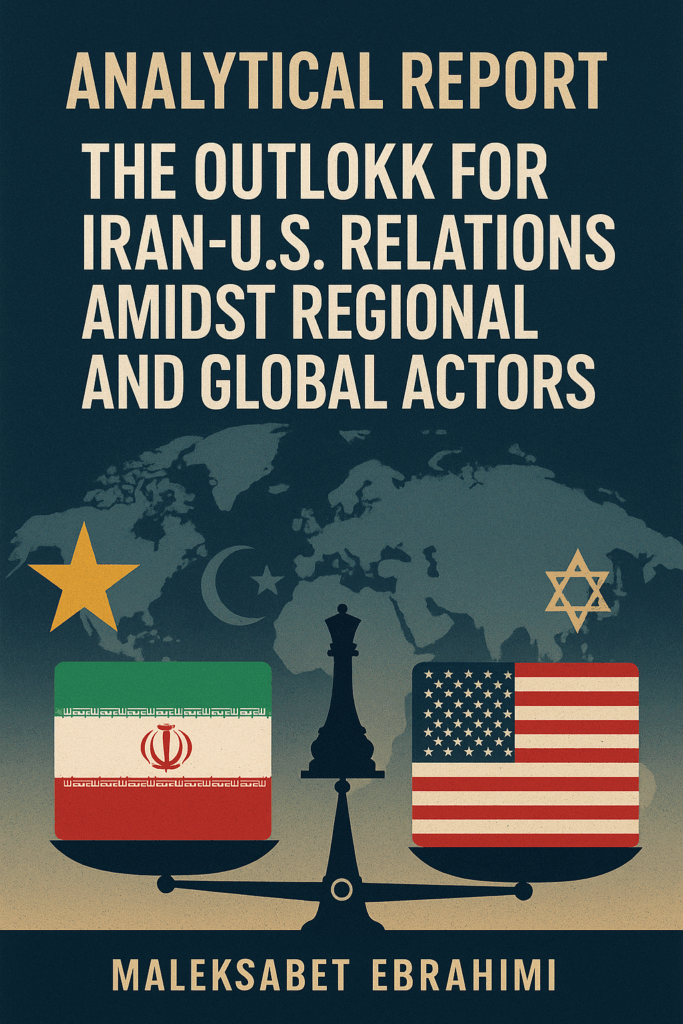
Analytical Report:
The Outlook for Iran-U.S. Relations Amidst Regional and Global Actors
After five rounds of direct and indirect negotiations, it seems that relations between Iran and the United States have reached a point where both sides clearly understand each other’s red lines and limitations. Unlike previous negotiations—often conducted under strict secrecy with plenipotentiary special envoys (Ilchis)—today’s diplomatic dialogues are closely monitored by the top leadership and senior institutions in both countries. Under these circumstances, such meetings are less about shifting fundamental positions and more about maintaining the appearance of diplomacy—a kind of ceremonial display stripped of real color or substance.
Regional and Global Developments: The Role of Key Players
Beyond the bilateral differences between Tehran and Washington, multiple regional and global actors shape the trajectory of these relations: China, Russia, the European Union, Iran’s proxy groups (in Yemen, Iraq, Lebanon, and Palestine), Saudi Arabia, and the wealthy yet small Gulf states.
- China:
Chinese policymakers aim to secure economic ties and energy security through Iran, while avoiding direct confrontation with the United States. Through initiatives like the Belt and Road, China seeks to keep Iran within its sphere of long-term interests and to prevent serious instability that could threaten the region’s security and energy flows. In this sense, China can be seen as a “pragmatic balancer” in its approach to Iran. - Russia:
Embroiled in its own grinding war in Ukraine, Moscow sees Iran as a valuable pressure lever against the West. Russia leverages Western sanctions on Iran to bolster its own military and economic ties with Tehran, but carefully avoids becoming overly entangled in the Iranian nuclear issue. Russia thus practices a policy of balancing: aligning with Tehran to pressure the West, while cautiously managing risks of direct confrontation with Washington. - Israel and Saudi Arabia:
Israel remains openly concerned about Iran’s nuclear and military capabilities, continuing limited cyber and military attacks to contain Tehran. Meanwhile, Saudi Arabia—despite recent detente with Iran brokered by China—remains wary of Iranian influence in Yemen and other regional flashpoints, maintaining its support for Western-aligned military and security frameworks. - The Houthis and Other Proxies:
Despite international pressure and Iran’s own economic constraints, these groups continue to serve as Tehran’s levers of regional influence. Iran provides carefully calibrated support to sustain political and security pressure on Saudi Arabia and the United States, even as it avoids sparking a wider military conflagration.
The Path Ahead: Crisis Management Over Compromise
Given the current alignment of regional and global players and the broader geopolitical landscape, the short-term outlook for Iran-U.S. relations is one of “crisis management” rather than any comprehensive settlement—unless, of course, an unforeseen event or major miscalculation abruptly transforms the playing field. This risk remains ever-present.
Within this dynamic, diplomacy—especially via secret channels or third-party mediators (such as Oman, Qatar, and even Russia in its shadowy roles)—will continue to operate. Yet neither side seems truly invested in forging a “fundamental compromise,” and what unfolds increasingly resembles a form of “heroic time-wasting” or posturing.
From the perspective of classical international relations theory, this situation is reminiscent of the Hobbesian Balance: in a tense and anarchic world, actors seek to guarantee their survival and security but implicitly accept a fragile equilibrium. In effect, the “futility of these negotiations” is not a complete impasse, but a tacit, temporary agreement to preserve the status quo—an arrangement that regional actors and both principal parties accept for now in pursuit of their own immediate interests.
Maleksabet Ebrahimi
Former Diplomat
June 1, 2025

Leave a Reply