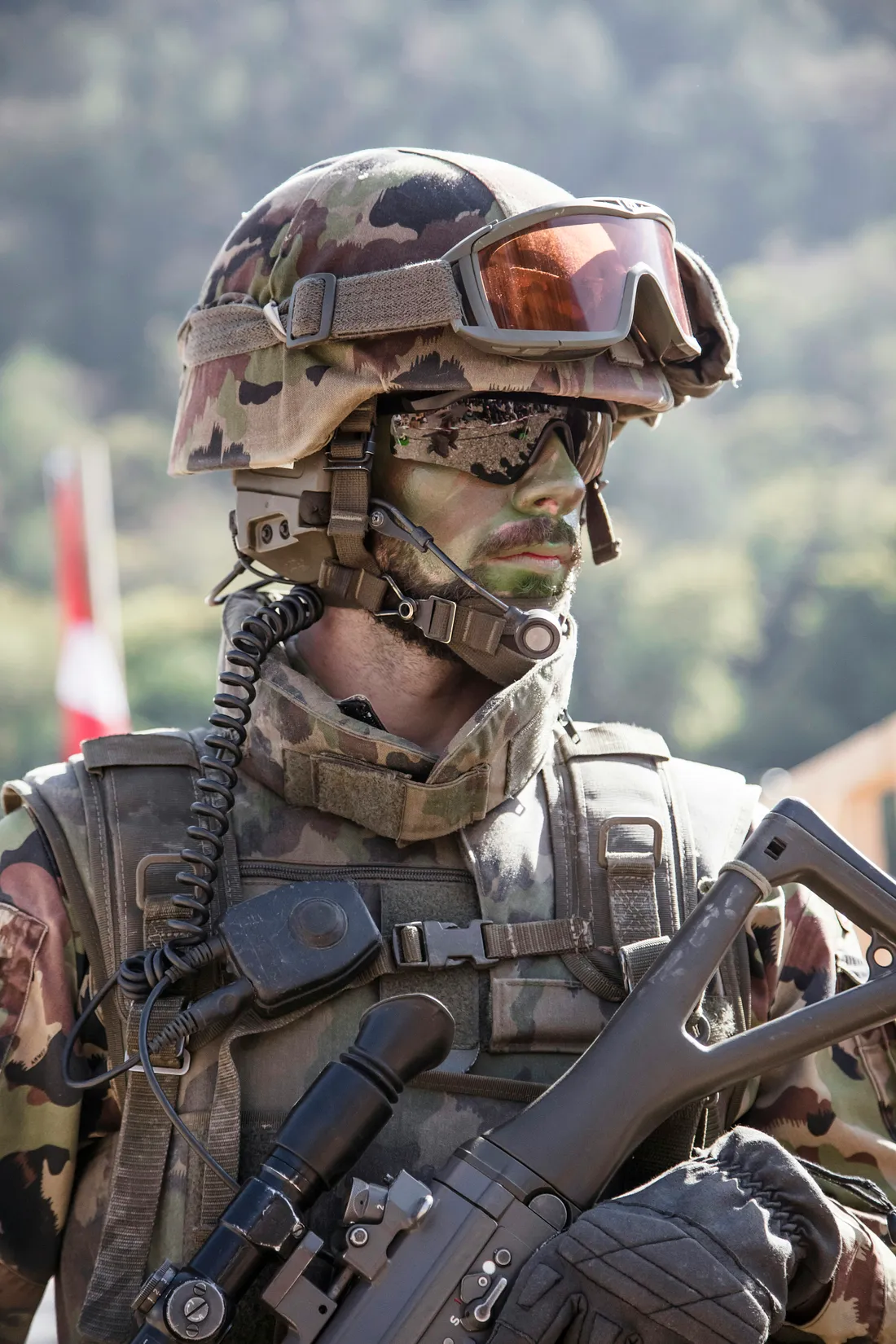
Photo by jan abellan on Unsplash
▪ Scenario One:
Temporary and Unstable Tension Management (Most Likely)
With intervention from the United States and China, both India and Pakistan may engage in rhetorical de-escalation. Official diplomatic ties are unlikely to be severed, but their shared borders will remain tense and militarized for an indefinite period. The Kashmir crisis will persist as a lingering and unresolved sore, continuing in the form of a protracted hostility.
▪ Scenario Two:
Continued Localized Clashes and Fire Exchanges (Less Likely)
Should extremist Pakistani militants, Kashmiri separatists, or Hindu nationalists carry out provocative attacks — or should an irreparable military miscalculation occur — a limited ground war in Kashmir could erupt. Though costly for India and Pakistan, this scenario may still be contained through international pressure and mediation efforts by countries like Qatar, Saudi Arabia, the United States, and even Iran, all of whom favour regional restraint and de-escalation.
▪ Scenario Three:
Involvement of New Regional Players (Less Probable but Highly Significant)
If China, due to its historical disputes with India, or the Afghan Taliban, who maintain ideological ties with groups like Lashkar-e-Taiba, Sipah-e-Sahaba, and the terrorist offshoot Lashkar-e-Jhangvi in Pakistan, were to enter the conflict, the equation would become significantly more volatile and difficult to manage. Additionally, Israel, due to its strategic partnership with India and strained relations with Pakistan, might exploit its intelligence presence to influence the conflict. Such involvement could lead to a regional unravelling and fundamentally transform the existing regional order.
Final Assessment
The recent confrontations between two nuclear-armed powers signal not the onset of a full-scale war, but rather the alarming fragility of regional and global stability, and the troubling erosion of classical deterrence mechanisms in today’s world.
Power dynamics have grown increasingly fluid, public trust in the global order has deteriorated, and international institutions—especially the United Nations—are at their weakest in decades. The Middle East and West Asia are now more vulnerable than ever to miscalculations and the escalation of unintended military conflicts.
Theory:
Even if India and Pakistan manage to contain their current tensions in the short term, they cannot fundamentally resolve their long-standing dispute over Kashmir without undertaking serious domestic reforms and engaging in direct regional dialogue. At best, they will delay the next catastrophe, not prevent it.
Malek Sabet Ebrahimi
May 7, 2025 — Toronto
(Eighteenth of Ordibehesht 1404 — Iran)
Leave a Reply